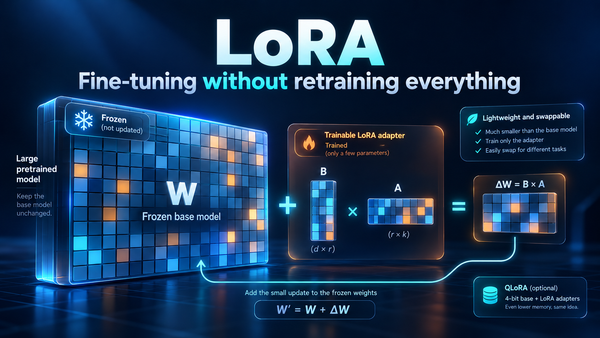
LoRA LoRA: Fine-Tuning Without Retraining the Whole Model When prompting hits a ceiling, teams often assume fine-tuning means retraining billions of parameters on a GPU cluster. LoRA (Low-Rank Adaptation) is why that's no longer true. The idea Instead of updating a layer's full weight matrix W, LoRA freezes W and learns a
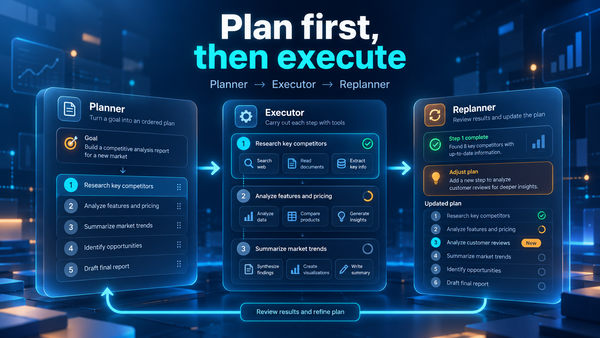
Agent Architecture Plan-and-Execute: Think Once, Act Many Times In this series we've covered ReAct (reason → act → observe after every step) and Reflexion (adding self-critique between attempts). Both send the main model back into the loop on every action. Plan-and-Execute takes a different approach: do the planning up front, then execute. How it works:
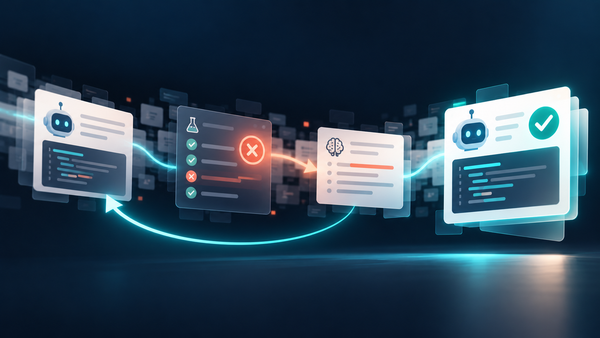
AI pills Agent Architecture Deep-Dive: Reflexion Two weeks ago I covered ReAct, the foundational reason → act → observe loop that most agents are built on. ReAct reasons well within a single pass, but it has no mechanism for actually getting better when that pass fails. Reflexion fixes that gap. How it works Reflexion wraps a task attempt
Claude Code Fighting "Lost in the Middle" Long-running AI agents have a well-documented failure mode: the further a piece of information sits from the start or end of the context window, the less reliably the model attends to it. This is the "lost in the middle" effect, and it's a big
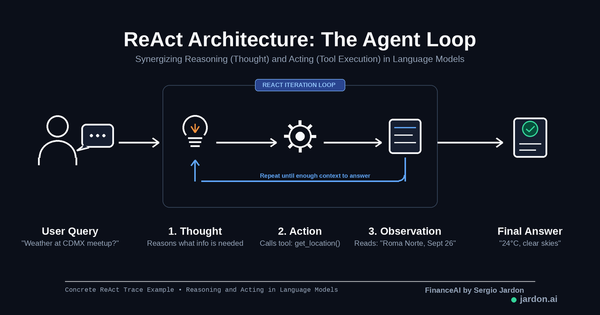
ReAct ReAct: The Loop Behind Most AI Agents When people say they've "built an AI agent," they usually mean the model can call tools and decide when to call them. Most of those systems are quietly running on a pattern called ReAct, short for Reason + Act. It's worth knowing on purpose, because