
Building the social path for your team
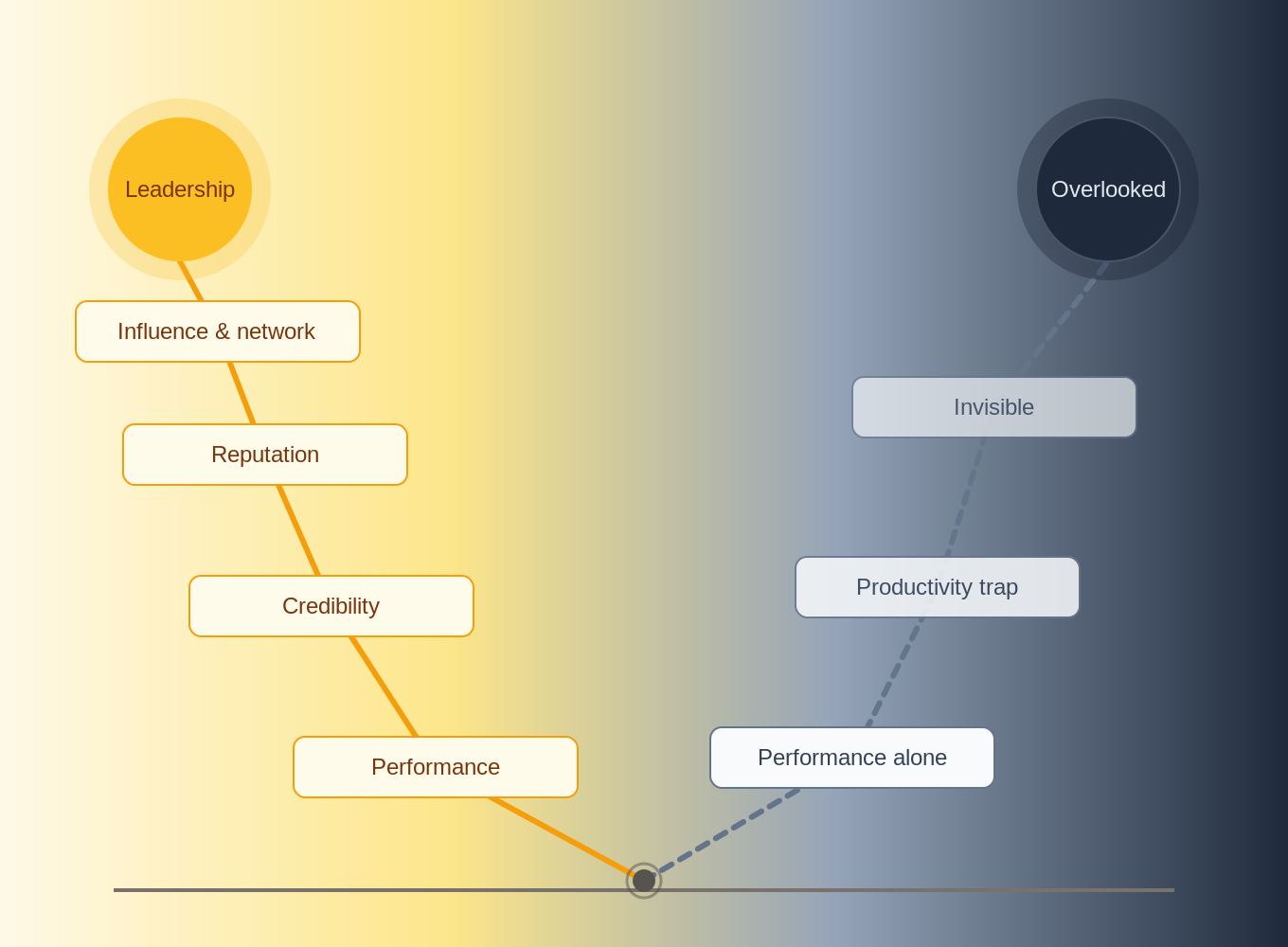
Every manger or leader I know can name their best individual contributor without hesitating: the programmer or team member whose work keep winning internal bake-offs, the engineer everyone routes the hardest bugs to. What's harder to answer is whether that person is actually on a path to leadership, or quietly becoming the most valuable, most overlooked person in the building.
A study published in MIT Sloan Management Review makes the case that this isn't a coincidence. It's a structural pattern, and one I think AI organizations are especially prone to.
Performance is necessary. It's not sufficient.
In "Develop Your Team's Social Capital, Not Just Their Skills," researcher James Areago interviewed 21 professionals across career stages and functions and found that advancement rarely hinges on capability alone. It hinges on social capital: the trust, reputation, and relationships that determine whether someone's work becomes visible beyond the room it happened in. One interviewee described reputation as a kind of "blind faith" colleagues extend based on how they feel about you and what they've seen you do before. Formal org charts define who reports to whom; informal trust decides who gets tapped when a new opportunity opens up.
Areago traces how social capital compounds through four connected components: performance earns credibility, credibility becomes reputation, and reputation is what lets influence and network reach beyond a person's immediate team. Sounds like a recipe to mount the organizational ladder, but miss the last two steps and you will be lost in nowhere land.
The trap that's most dangerous in tech orgs
Of the failure patterns Areago documents, one should worry tech leaders more than most: what he calls the productivity trap. High performers whose social capital comes entirely from output become operationally essential to their team and largely unknown to the people deciding who leads next.
Tech organizations are built to manufacture exactly this trap. Technical performance is unusually legible here: benchmark wins, shipped features, integrations, a clean commit history. The researcher who never presents outside their pod, the engineer who ships brilliant work but skips the cross-functional review, is accumulating precisely the kind of performance that, in Areago's research, eventually stops generating mobility and starts anchoring someone to their current role.
It gets sharper at senior levels. Once someone is far enough along to be considered for a leadership seat, the people deciding rarely have direct visibility into their actual work anymore. They're going on reputation, secondhand accounts, and who advocates for whom. In a field where the work itself is increasingly opaque even to technical peers outside a narrow specialty, that reputational layer carries more weight, not less.
Zigzag moves are the real test
Areago's research also highlights what he calls zigzag moves: lateral shifts across teams or functions, rather than a climb up a single ladder. Each move asks someone to establish credibility with people who have no direct knowledge of their prior track record. Social capital is what makes that possible. Without it, a genuinely excellent researcher can look, to a new team, like an unproven quantity.
What this means for anyone leading a team
Areago's advice for managers translates directly. Stop treating development as a purely technical-skills exercise. Look for who on your team is winning every internal metric but has never presented to another function, never been staffed on a cross-team initiative, never had their name come up in a room they weren't in. That's your productivity-trap risk, and it's often your best person.
The fix takes deliberate effort but isn't complicated: put your strongest technical people in front of stakeholders who don't already know their work. Stay engaged after the stretch assignment ends, since the follow-up relationship is where the actual credibility deposit compounds, not the assignment itself.
Before your next round of promotion or leadership-track conversations, ask a harder question than "who's performing." Ask who on your team is trusted by people outside their immediate function, who gets advocated for when you're not in the room, and who's never had the chance to find out. In tech world especially, where the work is fast-moving, and easy to measure, it's tempting to let the scoreboard make the call on its own. Areago's research is a reminder that the scoreboard only ever tells half the story.
Inspired by James Areago's "Develop Your Team's Social Capital, Not Just Their Skills" in MIT Sloan Management Review.